Leaving San Pedro de Atacama in the early morning, with the temperature below freezing, doesn't sound very tempting… until you arrive. the Tatio Geyser tour guide Let me explain what makes this excursion so special and why it's one of the most impressive sunrises in the Atacama Desert.
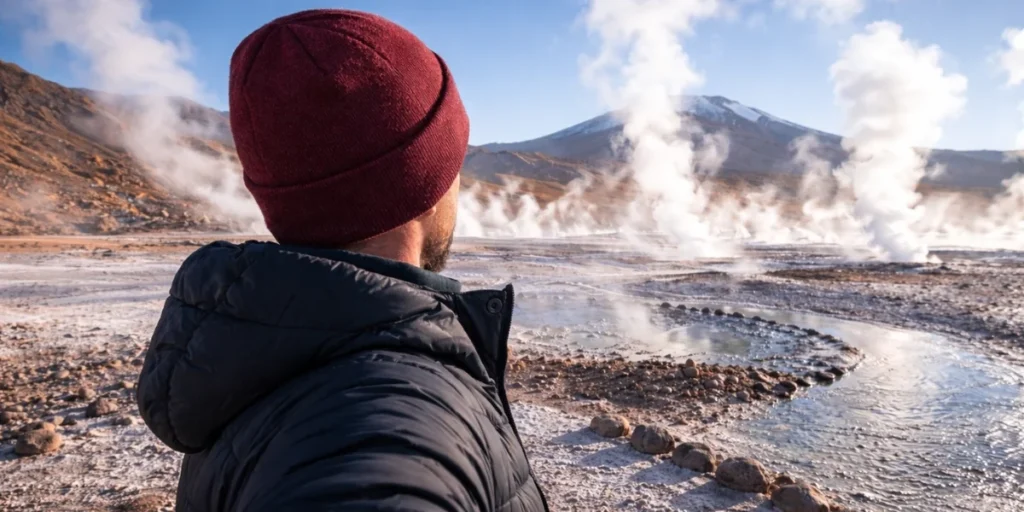
At over 4,300 meters above sea level, El Tatio awakens amidst steam, silence, and golden light. The icy morning air allows the geysers to be seen in their full splendor, with columns erupting from the depths of the earth, in a landscape that seems more Martian than Andean.
What is the El Tatio Geyser and why is it unique?
The Tatio Geyser is not a single geyser, but a huge active geothermal field It comprises more than 80 geysers, fumaroles, boiling pools, and steam vents that emerge directly from the earth's interior. It is located in the heart of the Andes Mountains, within the Chilean Altiplano, surrounded by volcanoes and mountains that rise to over 5,000 meters, in a completely isolated and wild environment.
What makes it truly unique is its combination of extreme geothermal activity and altitude. At 4,320 meters above sea level, El Tatio is considered the highest geothermal field in the world and the largest in the Southern Hemisphere. This height not only differentiates it from other famous geysers like Yellowstone, but also directly influences the visual intensity of the phenomenon.
Beneath the surface, water seeps through natural cracks until it reaches deep layers of the Earth's crust, where it comes into contact with volcanic rocks and hot magma. There, it heats up to temperatures that can reach 85–90 °C, generating enough pressure to be ejected again in jets of steam and hot water. This entire process occurs constantly, creating a living landscape that changes minute by minute.
Furthermore, El Tatio is a key location for the scientific research. Geologists and astrobiologists study it as a "natural laboratory," since its extreme conditions—high solar radiation, minerals, hot water, and low oxygen—are similar to those that might exist on Mars. They have even identified microorganisms capable of surviving in these conditions, which makes the place a point of interest beyond tourism.
Why does the tour take place at dawn?
The tour schedule is neither a coincidence nor an unnecessary torture for travelers: Dawn is the exact moment when El Tatio displays its maximum splendor.. During the early morning hours, temperatures can easily drop to -10 °C or even lower, creating a stark contrast with the boiling water emerging from underground.
This collision between the freezing air and the hot vapor is what generates the enormous white columns which rise several meters above the ground. As the day progresses and the ambient temperature rises, the steam becomes less visible and the spectacle loses its intensity. Therefore, arriving after 9 a.m. no longer offers the same visual experience.
Another key reason is the security. Walking through an active geothermal field requires good visibility to distinguish safe areas from hazardous zones, where the ground may be fragile or the water extremely hot. As the sun rises, the landscape gradually illuminates, allowing for safer exploration.
Furthermore, sunrise at El Tatio has an almost spiritual quality. The silence of the high plateau, the steam rising in the wind, and the golden light illuminating the nearby volcanoes create a unique atmosphere. It's not uncommon to see travelers silently observing, understanding that they are witnessing one of the most impressive natural phenomena in the Atacama Desert.
Height of the El Tatio Geyser and how it affects the body
One of the most important aspects of the tour—and one that many underestimate—is the altitude. The Tatio Geyser is located 4,320 meters above sea level, a considerable height even for those who have already been in San Pedro de Atacama for several days, which is about 2,400 meters high.
At this altitude, the amount of available oxygen is significantly lower, which can cause symptoms of altitude sickness. altitude sickness or soroche. The most common side effects are headache, dizziness, nausea, fatigue, and shortness of breath, especially when getting out of the vehicle or walking briskly. For this reason, guides usually recommend moving slowly, breathing deeply, and avoiding unnecessary exertion.
Extreme cold also plays a significant role. The body uses more energy to stay warm, and combined with a lack of oxygen, this can increase feelings of fatigue. For this reason, it is essential to go well wrapped up, hydrated and having slept enough the night before.
One key piece of advice is Do not take this tour on your first day in San Pedro.. Ideally, it should be left until the body has had at least one or two days to acclimatize. This way, the experience is much more enjoyable and the risk of discomfort is reduced.
Well prepared, the body adapts and the effort is richly rewarded. Standing there, breathing in hot steam as the sun peeks out from between the volcanoes, is one of those once-in-a-lifetime experiences… and it explains why the Tatio Geyser is a must-see in Atacama.
Temperatures, climate and extreme conditions
The weather at El Tatio Geyser is one of the factors that most shapes the tour experience and, at the same time, one of the most underestimated. We're not talking about "normal cold" here, but rather... high mountain conditions in the heart of the Andean plateau. During the early morning and dawn —the time when the visit takes place— temperatures usually range between -10 °C and 0 °C, And on particularly cold days, temperatures can drop even further. Added to this is the wind, which reduces the perceived temperature and makes the cold feel intense as soon as you get out of the vehicle.
What is unique about El Tatio is the extreme temperature contrast in a few hours. As the sun begins to rise, the temperature climbs rapidly, and it's not uncommon to go from intense cold to relatively mild weather before leaving. On clear days, temperatures can easily reach [temperatures missing] by mid-morning. 10 to 20 °C, This forces you to dress in layers and constantly adapt. This sudden temperature change is exhausting for the body if you're not properly prepared.
Furthermore, the climate is very dry and the solar radiation is intense due to the altitude. Although the air is cool, the sun is scorching, so it's common to finish the tour with chapped lips, dry skin, or even sunburn if sun protection isn't used. All of this makes the Tatio Geyser an extreme environment, where the weather is not a minor detail, but a central part of the experience.
How the world's highest geothermal field works
The El Tatio Geyser is an active geothermal system fed by the intense volcanic activity of the Altiplano. Beneath the surface, water from rain and snowmelt seeps through natural cracks in the earth until it reaches deep layers near the magma, where it is heated to very high temperatures. This water, trapped under pressure, seeks an outlet and rises back to the surface.
When hot water comes into contact with the cold air outside, the phenomenon that makes the place famous occurs: jets of steam and boiling water that emerge constantly or intermittently. The water can reach temperatures close to 90 °C, Therefore, walking off the marked trails is extremely dangerous. The ground may appear solid, but in many areas it is fragile and conceals boiling water just a few centimeters below the surface.
The reason El Tatio is so special is not just its activity, but its record altitude. At over 4,300 meters above sea level, atmospheric pressure is lower, which directly influences how steam is released. This factor, combined with the extreme cold, makes geysers especially visible and spectacular at dawn, something that doesn't occur with the same intensity in geothermal fields located at lower altitudes.
Science and extreme living: why they study El Tatio
El Tatio doesn't just attract tourists; it's also a world-class scientific site. Geologists, biologists, and astrobiologists consider it a unique natural laboratory, because it brings together extreme conditions that are difficult to find together elsewhere: high altitude, intense solar radiation, hot water loaded with minerals and an environment with very little oxygen.
One of the main areas of study are the extremophile microorganisms that manage to survive in these conditions. These living beings thrive in warm, mineral-rich waters, demonstrating an extraordinary capacity for adaptation. Studying them helps us understand how life could exist in extreme environments beyond Earth, especially on planets like Mars.
Furthermore, El Tatio offers a firsthand look at active geological processes. Analyzing its fumaroles, minerals, and formations helps us better understand the Earth's internal dynamics and the volcanic systems of the Altiplano. For this reason, it is not uncommon for international researchers to visit the area, reinforcing the idea that this place is much more than just a tourist attraction.
Hot springs: are they worth bathing in?
Within the Tatio Geyser area there are thermal pools available for bathing, Fed by geothermal waters that cool to safe temperatures, bathing in them, surrounded by steam and with the high plateau landscape as a backdrop, is an experience many travelers consider unforgettable, especially after the intense cold of dawn.
However, it's not an experience for everyone. The contrast between the freezing air and the warm water can be intense for some people, especially considering the altitude. Furthermore, the pools are simple, lacking sophisticated tourist infrastructure, which reinforces their natural and rustic character. You have to enter and exit carefully, as the cold is quite strong when you get out of the water.
If you are well acclimatized and have no problems with the altitude, Yes, it's worth it.. It's a different way to experience El Tatio, to relax for a few minutes and feel the power of the area's geothermal energy. Of course, always respecting the rules, bathing only in authorized areas, and following the guide's instructions to avoid unnecessary risks.
What to wear on the El Tatio Geyser tour
Choosing the right clothes for the Tatio Geyser tour is not a minor detail: It makes the difference between enjoying the experience or having a bad time.. The main mistake many travelers make is dressing "for the cold" without understanding that they will be facing... extreme cold in high mountains, wind and a very abrupt temperature change in a few hours.
The key is getting dressed by layers. The first layer should be thermal, ideally made of merino wool or a synthetic material, as it retains body heat and wicks away moisture. Avoid cotton: when wet, it cools the body and can make you very cold. Over this, a second warm layer, such as fleece or softshell, helps retain heat. The third layer should be a windproof and thermal jacket, Preferably waterproof, as the wind on the high plateau is constant and very cold at dawn.
At the bottom, the ideal are thermal pants or trekking trousers with built-in tights. Jeans are not recommended: they don't provide enough warmth and get cold quickly. Feet deserve special attention: thick thermal socks and closed shoes, ideally trekking shoes, with good soles. The ground is usually icy and, in some areas, wet.
Accessories are essential. A hat that covers your ears well, thermal gloves (preferably waterproof), a scarf or neck warmer, and sunglasses. Believe it or not, the sun is strong at higher altitudes, so sunscreen and lip balm They are essential. Dressed properly, the cold ceases to be an enemy and becomes part of the experience.
Safety regulations within the geothermal field
The Tatio Geyser is a stunning natural environment, but it is also potentially dangerous If the rules are not respected. It's not a theme park: it's an active geothermal field, with boiling water circulating just centimeters below the surface.
The main rule is Never leave the marked trails. The ground may appear firm, but in many areas it is fragile and can collapse, exposing water to temperatures close to 90°C. For this reason, walking around unsupervised or getting too close to the geysers is not only reckless, but extremely risky.
Always follow the guide's instructions, keep your distance from the fumaroles, and do not touch the water or geothermal mud. Running, pushing, or using your cell phone while walking is also prohibited. The steam can reduce visibility and cause disorientation if you are not careful.
Another key point is taking care of your body. Due to the altitude, it's recommended to move slowly, stay well hydrated, and immediately notify your guide of any symptoms of altitude sickness, such as severe dizziness, nausea, or a bad headache. Following these guidelines not only ensures your safety but also the preservation of this fragile and unique ecosystem.
Is the El Tatio Geyser tour worth it?
The short answer is yes, but with some nuances. tour to the Tatio Geyser It's not for everyone., And that's precisely why it often leaves such a strong impression on those who do it. It involves getting up at dawn, enduring intense cold, and facing the altitude. If you're looking for a comfortable and relaxing excursion, it's probably not the best option.
However, if you're interested in extreme nature, unique landscapes, and experiencing something out of the ordinary, the tour is truly worthwhile. Watching the sun slowly illuminate a field filled with plumes of steam, amidst the silence of the high plateau, is an experience difficult to compare to anything else in Atacama. It's not just "seeing geysers," it's feel the living earth beneath your feet.
Furthermore, this excursion adds context to the trip: it helps you understand the volcanic activity of the area, the harshness of the environment, and why the Atacama Desert is so special. With good planning, appropriate clothing, and after a few days of acclimatization, the effort transforms into one of the most powerful memories of the trip.
Therefore, Yes, it's worth it., As long as you go prepared, with realistic expectations and willing to experience Atacama in its rawest, most authentic and spectacular version.